ABOUT
_____________________
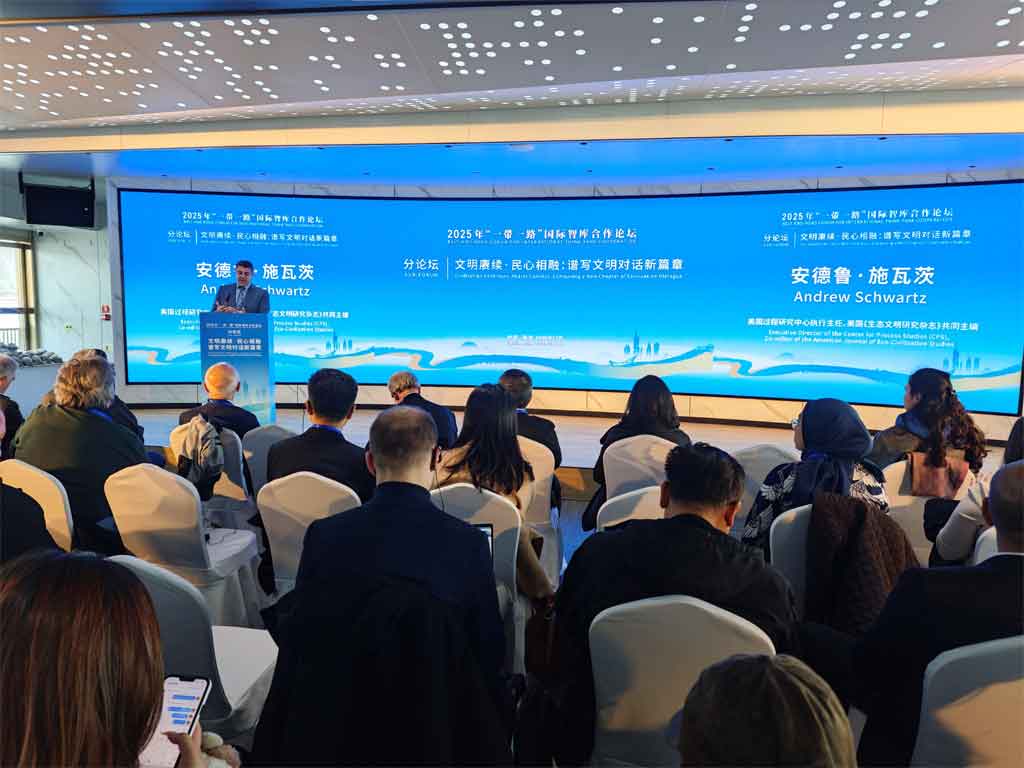
Dr. Wm. Andrew Schwartz is an American scholar and activist. He currently serves as Visiting Associate Professor at Beijing Normal-Hong Kong Baptist University (BNBU) in Zhuhai, China as well as Executive Director of the Center for Process Studies (CPS), Vice President of the Institute for Ecological Civilization (EcoCiv), and Associate Professor of Process Studies and Comparative Philosophy at Claremont School of Theology (CST). His research and teaching covers a wide range of topics, such as environmental philosophy, philosophy of religion, Asian and comparative philosophies, metaphysics, economic philosophy, philosophy of mind, philosophy of education, and more. However, his current work mainly focuses on the role of big ideas in bringing about systems change for the long-term wellbeing of people and the planet (i.e. ecological civilization).
PUBLICATIONS
_____________________
WHAT IS ECOLOGICAL CIVILIZATION?: CRISIS, HOPE, AND THE FUTURE OF THE PLANET
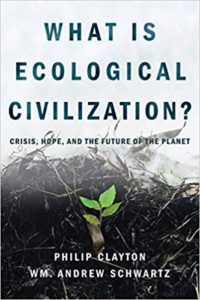 This book explores the idea of ecological civilization by asking eight key questions about it and drawing answers from relational philosophies, the ecological sciences, systems thinking and network theory, and the world’s religious and spiritual traditions. It concludes that a genuinely ecological civilization is not a utopian ideal, but a practical way to live. To recognize this, and to begin to take steps to establish it, is the foundation for realistic hope.
PODCASTS
_____________________
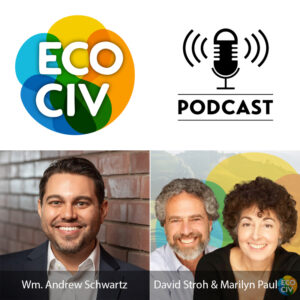
Listen to podcast recordings featuring Dr. Schwartz on a range of topics.
VIDEOS
_____________________
Andrew Schwartz gives a plenary address on "Learning from Living Systems: Biomimicry and the Principles of Ecological Civilization" at the 17th International Forum on Ecological Civilization at Pitzer College.
SELECTED MEDIA COVERAGE
_____________________
- China's Ecological and Environmental Code: A New Legal Blueprint for Global Ecological Governance, Global Times (August 19, 2026)
- 施瓦兹教授做客西电,畅谈生态文明与过程哲学, Sino-US Times (April 14, 2026)
- Expertos en China instan al aprendizaje mutuo y desarrollo sostenible, Prensa Latina (November 20,2025)
- “‘两山’理念是中国的,也是世界的”, People's Daily (August 16, 2025)
- 综述丨“两山”理念有力推动构建共同发展的绿色家园——多国专家热议中国生态文明建设成就, Xinhua News (August 11, 2025)
- 安德鲁·施瓦兹:“两山”理念为全球生态文明建设提供智慧引领, People's Daily (August 2, 2025)
- International experts laud Xi's 'Two Mountains Theory' as global model for ecological civilization, China Daily (August 2, 2025)
- The hope-filled worldview of John B. Cobb Jr., The Christian Century (March 2025)
- Experts call for boosting ecological civilization cooperation at global forum, Xinhua (May 28, 2022)
- Feature: Chinese, American college students discuss eco-civilization in California, Xinhua (April 29, 2018)